
Fed Intuition vs Delayed Data
The Fed peers through the fog and anticipates the data.


The Fed has had to operate in a data vacuum for 2 months. In spite of the lack of data they still have to do their job the best they can by relying on what they can glean from private sources about the economy. As the data comes in the Fed appears to have anticipated it well.
This week we finally started to get our first drips of official data after a two month gap because of the government shutdown. The first report was the jobs data which covered both October and November. The unemployment rate for November increased to a 4-year high of 4.6%. This was up from 4.4% in September. The report showed an increase of 64,000 jobs in November, but that was following a loss of 105,000 jobs in October. August and September reports were also revised lower by 33,000 jobs. October and November taken together would be a net loss of 20,000 jobs per month. Recall, however, that Jerome Powell said at the last Fed meeting press conference that they know the current jobs surveys are overcounting about 60,000 new jobs per month. His admission means that is the frame they are operating under when they look at the jobs data. If we assume that to be linear and apply that math to this jobs report that means that the US economy may have lost about 80,000 jobs per month in both of the last two months.
That is a very negative jobs number and would explain how the unemployment rate jumped 2 tenths of a percent to a new 4-year high at 4.6%.
The second report was the first look at inflation since September. There was no look back into October for inflation so we simply have a gap in the data series there and have only the November data which encompasses both months in one report. As such I am not going to talk about some of the monthly data being reported since it seems to be imputed given there is no October number. The annual inflation data was quite good actually.
Annual CPI for November dropped to 2.7% from 3.0% in September.
Annual core CPI for November dropped to 2.6% from 3.0% in September.
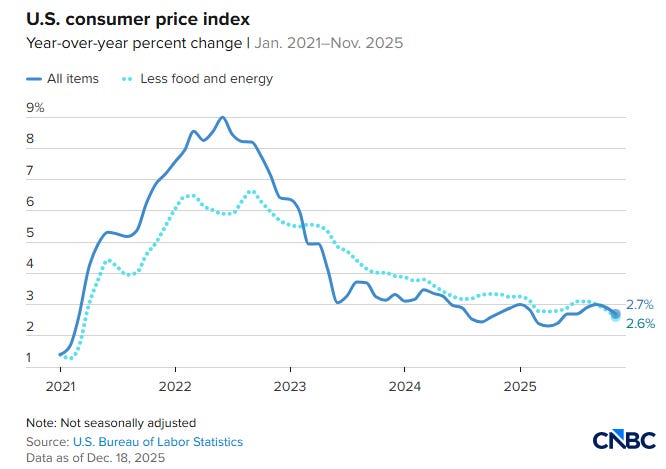
These are really large drops and has us bouncing back below the 3% range. I will highlight again how truly safe and unremarkable I find inflation in this range. This is entirely normal inflation. There is nothing special or necessary about hitting the Fed’s 2% target. We may hit it eventually, but it is not a necessity for stable inflation. Inflation bouncing around either side of 3% is not something we need to be concerned about. We have been here in this stable range for 2.5 years now. We could stay here for another decade, and it would be just fine.
The real issue that people are feeling in the economy is not inflation but elevated price levels. That may sound like the same thing but they are very different. People don’t truly understand or think in terms of inflation, they really only relate to prices. What they are feeling is that prices are considerably higher than they were before the pandemic, and in some ways wages haven’t quite kept up across the entire economy especially in some key areas like food and housing. That makes budgets tight and explains why they feel as they do.
Unfortunately that is the natural result of a period of elevated inflation. This occurred after the 1970s as well. Prices will never return to pre-pandemic levels. This is the new normal. It will take time and wage increases for people to adapt to this new level. Low inflation does not mean price pressure gets better. It just means it stops getting worse. That is the rub with fixing inflation. It doesn’t fix prices. The only relief for high prices is higher wages.
These two reports taken together do look to vindicate the Fed for doing a 3rd interest rate cut in spite of having no official jobs or inflations data. They were able to look at private data and determine that job weakness appeared to be a higher risk than reigniting inflation. The data now shows them to be correct at least in the short term.
There has been a lot of questioning of the Fed for cutting into a slight uptick in inflation. Questioning the actions of the Fed based on minor short term changes in data has become something of a past time for a lot of market observers.
But there is one data series I have posted multiple times here that had a huge change and that is the CPI Shelter index.
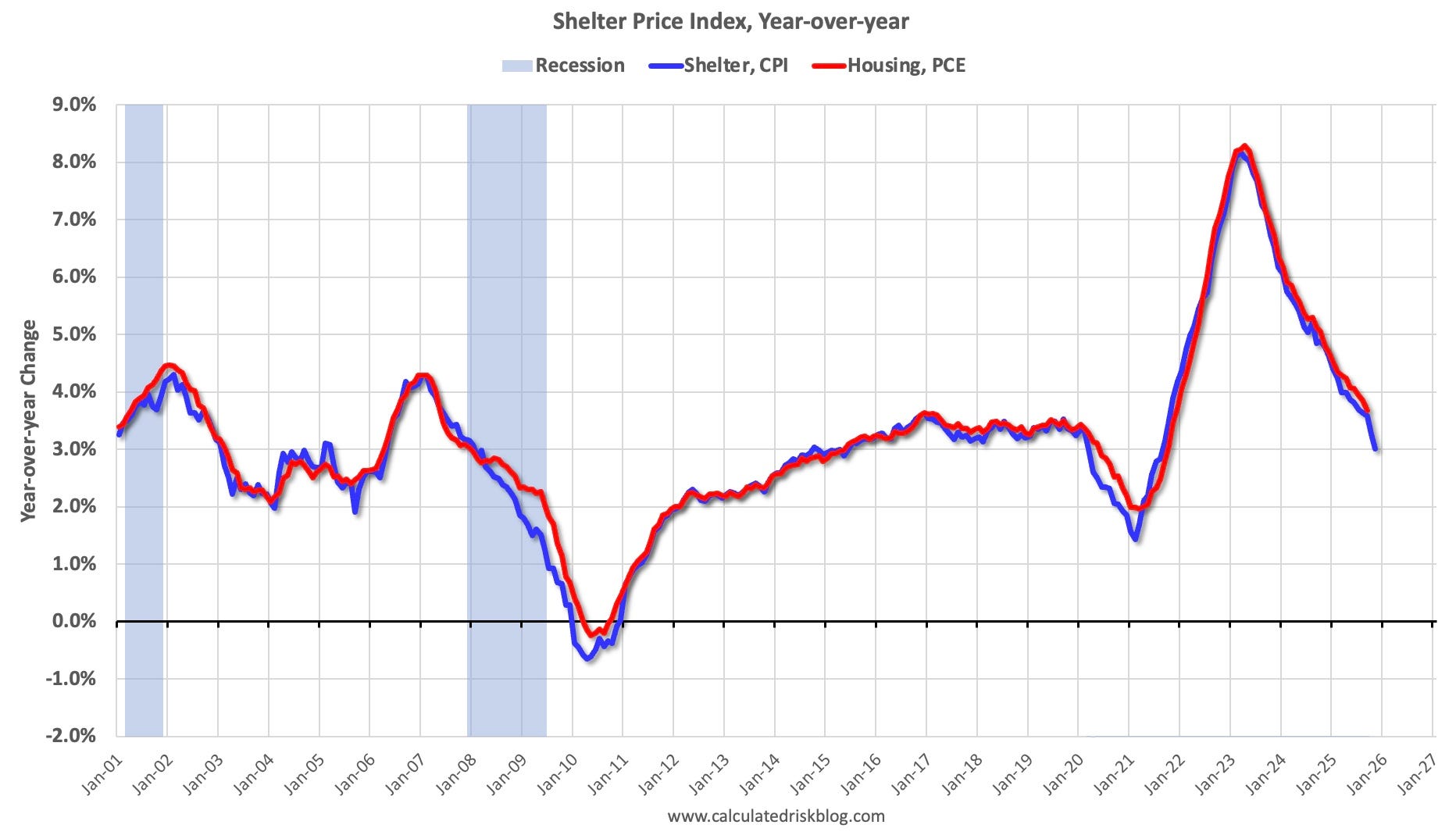
This is the index everyone has been worried about for many years now as it operates with long lags. I had said repeatedly that it was going to come back down into the 3% range but would take a year or two to do it. This month the CPI shelter index absolutely fell off a cliff and dropped from 3.6% all the way down to 3%. At 3% shelter is still having a slightly outsized impact on the CPI numbers but it is now much smaller than it used to be. Core CPI ex-shelter was actually up only 2.3% year over year.
This was a remarkably good CPI report on the heels of a fairly weak jobs report. If this trend in jobs and inflation continues the Fed will be considering further interest rate cuts possibly as early as March. If it doesn’t continue we are probably on hold a while longer.
The Fed’s intuition continues to be proven right by the data. They won’t be perfect, but they are doing a remarkable job of threading a very thin needle.